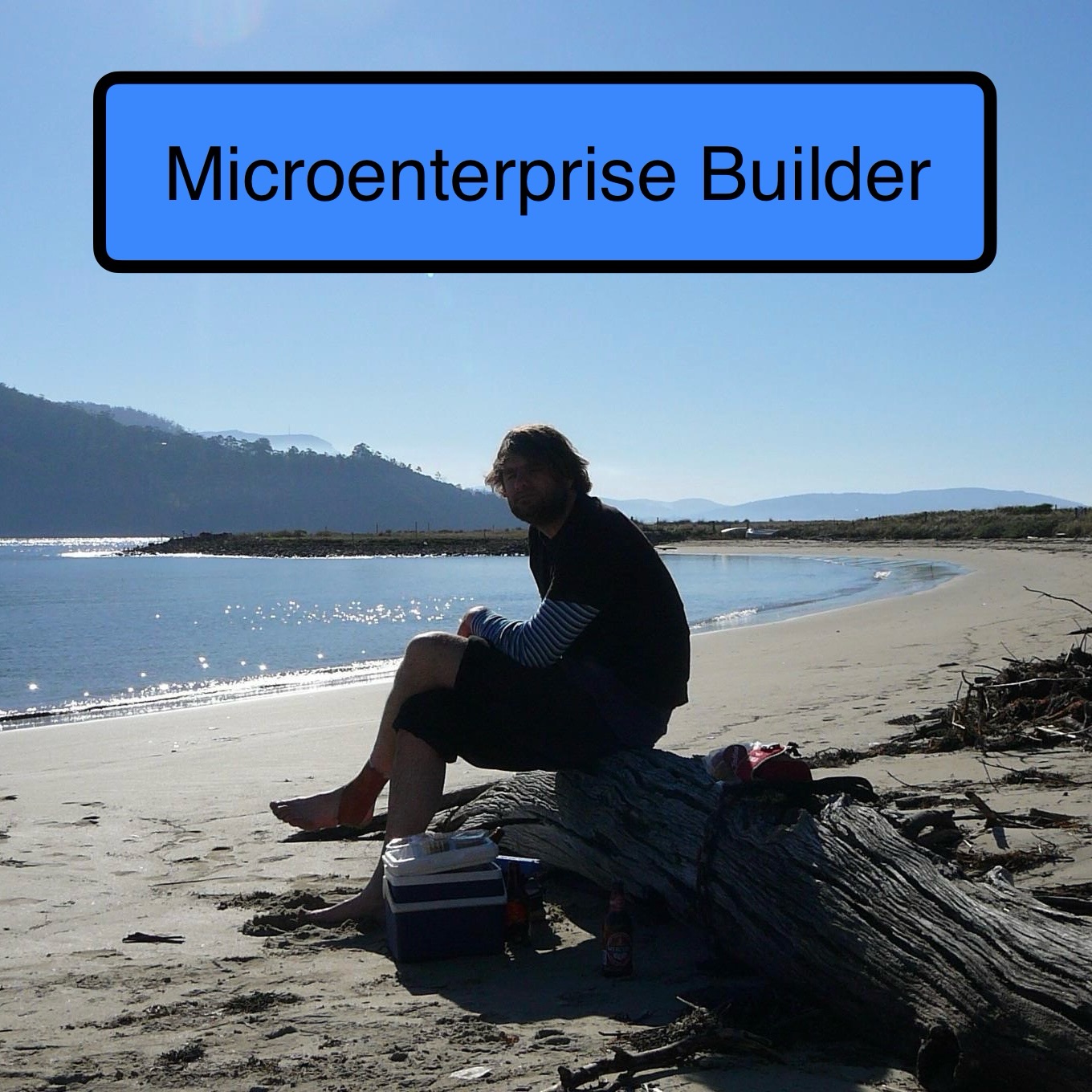
Chapter One: Picking Up Wood

I didn’t begin with business. I didn’t begin with vision. I began with survival.

I grew up inside abuse and neglect — not always loud, not always visible, but constant enough that my nervous system learned one main skill: endure. As a kid in a bad family I was taken to a large farm in Victoria and they introduced me to a man who they had working on their farm – they told me he had had a bad family growing up and he worked with wood which was something that allowed you to think about your past while you worked – and they said in that way he was a productive man.

However I showed some talent at school. And I liked to gain the affection of the teachers. I didn’t know how to get involved with wood. My step father never let me use any tools at home. So I stayed in school – and never really left.

I probably stayed in school too long because school was safer than home. It was structured. Predictable. You knew when bells would ring. You knew what was expected of you. So I stayed. And stayed. And stayed.

I followed education the way some people follow a road out of town — not because they love the road, but because it leads away from where they started.

Eventually I graduated. A long-awaited degree. In something called “business.” It was abstract to me. Like learning the map of a country I had never walked in. I had no hope of becoming a business man like the other students.

Moreover on the day I graduated, something strange happened. Instead of feeling complete, I felt empty. Like I’d finished a road that didn’t actually go anywhere.

So I picked up a piece of wood. Not as a plan. Not as a strategy. Just to see. I worked on it for a while. Slowly. Clumsily. To make sure — to check whether this was real or just a distraction. Whether my hands were telling me something my head hadn’t yet learned to say.

And they were.

searching around for wood. Going into the bush or people’s places I know might have some wood down the back. People were surprised I had something I wanted to do. I hadn’t wanted to be learning at school for about 10 years.

After that I lost my workshop, which was borrowed from someone. So I left. I went travelling, not for leisure but for direction. I was looking for a new place to do my workwork — not just a place, but a way of living where making something with your hands could also make something in you.

That search ended in Tasmania, in the hills.

There, alone, I began making furniture. Rustic, imperfect, honest. Made from recycled wood. Wood with history in it. Nails pulled, scars kept, shapes that refused to be smoothed into sameness.

For ten years I worked mostly alone, though I would load my diesel ute on a Saturday, and sell what I’d made at Salamanca Market.

I learned what wood does when you respect it.

I learned what I do when I am not being watched.

I learned that making things was also making myself.

But isolation is not a final form. Thanks Nietzsche!

Something in me started wanting people again — not the chaos of my childhood, but the possibility of shared work. So I went back to university, not to escape life, but to understand it with a social degree.

That’s when woodcraft stopped being only mine.

It became something for a community.

First through a project called Cognitive Factory — working on capacity, designing woodworking systems with people who had acquired brain injuries. We weren’t trying to make perfect products. We were trying to make possible work.

Then came Woodwork Warriors — working with wood in a psychosocial centre. Wood became a way to breathe. To slow. To belong without needing to explain yourself.

And then, slowly, Woodcraft Adventures — not just making with wood, but making toward capacity. Toward dignity. Toward the idea that work could be shaped around people, not people crushed into work.

Looking back, this wasn’t a straight path.

It was a long road away from harm.

Then a wrong road that looked like success.

Then a piece of wood in my hands.

Then mountains.

Then people.

Then community.

This microenterprise didn’t begin as a business.

It began as a body learning it was allowed to make something.

Read another chapter of Microenterprise Builder:

    Chapter Eighty Eight: When Loyalty Becomes a Limit

    There comes a point in building something small where effort is no longer the problem. Love is not the problem. Even commitment is not the problem.

    Capacity is.

    I think I’ve reached that point in my microenterprising.

    For a long time, I believed this work could grow through one relationship — through shared domestic life, shared making, shared survival. I thought: we can do this together, just us. That care, that loyalty, that closeness would be enough.

    But it isn’t enough to grow something that wants to move outward.

    I have been pushing a course that no longer has capacity behind it. Not because of cruelty or lack of love — but because the person beside me does not want expansion, does not see the vision, does not want the weight of outward thinking, economic growth, or business development.

    And I kept pushing anyway.

    Not because it made sense — but because I didn’t want to leave loyalty behind.

    At some point, loyalty becomes a ceiling.

    I didn’t see that for a long time because I was living domestically — inside care, inside survival, inside the daily work of keeping life together. In that space, you stop thinking outward. You stop imagining scale. You stop asking who else could carry this with you.

    You shrink your vision to fit the room you’re in.

    I did that.

    I kept telling myself: She can do it, or I can do it with her. That was the boundary of my imagination. And slowly, without noticing, I stopped thinking like a microenterprise and started thinking like a household.

    This project doesn’t want to be a household.

    It wants to be a network.

    It wants groups who can carry it further, not just one pair of hands. It wants connections that know how to market, organisations that can resource, people who can change processes, not just endure them.

    It wants outward thinking.

    And I haven’t been free to do that while staying inside one limited structure.

    Yesterday I went to a Psychosocial Centre — a place from my past — and talked about running a woodworking and woodcarving workshop. Not a big thing. Not a finished thing. Almost a mock version of what’s coming in February.

    But something shifted.

    I wasn’t asking, “Can we manage this?”

    I was asking, “What could this become?”

    That’s a different posture.

    It felt like stepping into a future version of myself — one who is not trying to squeeze vision into survival, but letting it look for the people and places that can hold it.

    This feels like a new stage.

    Not because everything is clear — but because something is no longer possible.

    I cannot keep pushing a path that doesn’t have capacity behind it.

    I cannot keep mistaking loyalty for infrastructure.

    I cannot keep shrinking the work to protect a structure that cannot grow.

    This doesn’t mean abandoning love.

    It means refusing to let love define the limits of what is possible.

    This blog is the only continuous record of this microenterprise becoming. Every confusion, every detour, every compromise, every spark has passed through these words.

    So this chapter marks a turning point.

    Not a success story.

    Not a strategy.

    But a decision:

    To stop forcing growth where there is no capacity.

    To start looking for the people, groups, and systems that can carry this work outward.

    To let the project become what it has been asking to become — even if that means becoming someone new in the process.

    This is the moment where microenterprise stops being private.

    And starts becoming a movement of others.

    Read an early or later chapter of Microenterprise Builder:

      Chapter Ninety One: Strong Hands, New Beginnings.

      An independent craft business

      A craftsperson story, and a model for many more

      Priscilla’s Woodcraft Adventures began quietly, at a workbench, with timber dust on the floor and oil warming under her hands.

      Before wood, Priscilla worked with fabric. She sewed for years—measuring, cutting, shaping, finishing. When life changed suddenly and painfully, those same strong, practiced hands had to learn something new. The transition was smoother than either of us expected. Sewing became sanding. Finishing seams became oiling timber. The patience, care, and attention to detail were already there.

      What began as a need quickly became a craft.

      After her husband abandoned her, Priscilla needed income—real income—not charity, not a short-term fix. She began making wooden pieces and selling them locally. One shop became two. Two became five. Eventually, her work was stocked in ten shops. Each piece carried her quiet determination, her growing confidence, and her unmistakable care.

      This wasn’t just about making things.

      It was about rebuilding life through meaningful work.

      From one craftsperson to a shared model

      Priscilla’s Woodcraft Adventures is not a one-off success story. It is the prototype.

      Woodcraft Adventures exists to support many individual craft businesses like hers—each with its own name, story, and maker, all modelled on the same strong foundation.

      Under the Woodcraft Adventures model:

      • The craftsperson focuses on making
      • Central support manages:
        • Design systems
        • Manufacturing workflows
        • Quality standards
        • Online sales and marketing
        • Storytelling and brand presence

      This allows skilled makers—especially women who need flexibility, dignity, and income—to build an online business without needing to master everything at once.

      It’s not a hobby model.

      It’s not charity.

      It’s a real business pathway.

      Growth, confidence, and possibility

      As Priscilla’s work grew, so did her confidence. She began refining designs, understanding timber more deeply, and taking pride not just in survival, but in excellence. Customers didn’t buy her work because of her story—they bought it because it was beautiful, solid, and made with care. The story simply made it human.

      Today, Priscilla’s Woodcraft Adventures stands as proof that:

      • Craft skills are transferable
      • Online businesses can grow from kitchen tables and sheds
      • Women in need of a side hustle—or a full income—can build something lasting
      • With the right structure, support, and respect, creative work can sustain a life

      The bigger vision

      The long-term vision for Woodcraft Adventures is to support many Priscillas.

      Women with capable hands.

      People rebuilding after disruption.

      Makers who want meaningful work without navigating everything alone.

      Each individual Woodcraft Adventure remains personal and local—but connected to a shared system that makes growth possible.

      Priscilla’s story is where it began.

      It is not where it ends

      More reflections about the work:

      Chapter Ninety: Woodcraft Adventures. Become a Maker

      “Ever wonder if your hands-on skills might turn into something more — without pressure, prescribed steps, or losing your independence?”

      Start your own woodcraft adventure

      Not everyone who becomes a maker planned to.

      Often it starts quietly — enjoying working with your hands, giving something you made to someone you care about, or noticing that time slows down when you’re shaping wood. For some people, it’s not about becoming a “business owner” at all — it’s about finding a rhythm that feels meaningful, grounded, and human.

      Woodcraft Adventures exists for people like that.

      Not as a franchise.

      Not as a rigid system.

      But as a shared adventure in making, learning, and growing at your own pace.

      What we mean by “becoming a maker”

      A maker isn’t defined by output, speed, or scale.

      A maker is someone who:

      • enjoys working with wood and natural materials
      • values care, story, and craft
      • wants to make things that matter to people
      • is open to learning — slowly, relationally, honestly

      You don’t need to know where it will lead.

      You don’t need a five-year plan.

      You just need curiosity and a willingness to start.

      A lived example: Priscilla’s woodcraft adventure

      Priscilla didn’t set out to “start a business.”

      She began carving because she loved it — animals, textures, shapes that felt alive in the grain. Making was a way of being present, of expressing care, of working with her hands in a way that felt right.

      Over time, people noticed.

      They asked questions.

      They wanted pieces of their own.

      What grew wasn’t pressure — it was confidence.

      Priscilla learned how to:

      • choose and work with different Tasmanian timbers
      • price pieces fairly and sustainably
      • share the story behind each creation
      • balance making with rest, life, and relationship

      Her woodcraft adventure grew because it was allowed to grow gently — supported, not pushed.

      That’s the spirit Woodcraft Adventures is built on.

      How Woodcraft Adventures supports you

      Support here doesn’t mean hierarchy.

      It looks more like:

      • shared knowledge and encouragement
      • help navigating online selling when you’re ready
      • guidance around pricing, presentation, and story
      • realistic expectations about pace and capacity
      • permission to grow slowly — or stay small

      Some makers produce regularly.

      Some make seasonally.

      Some are just beginning.

      All are respected.

      Who this is for

      This might be for you if:

      • you love working with wood but don’t want pressure
      • you’re curious about selling but unsure how it works
      • you value relationships over hustle
      • you want flexibility, not a rigid pathway
      • you believe craft carries story and care

      If you’re unsure — that’s okay.

      Curiosity is enough to start a conversation.

      No pressure — just a conversation

      Becoming a maker doesn’t begin with commitment.

      It begins with connection.

      If you’d like to talk — about your skills, your interests, or simply what might be possible — we’d love to hear from you.

      Start a conversation about becoming a maker.

      Or, read more about Woodcraft Adventures or Microenterprises


        FAQ

        Do I need business experience?

        No — we support you around the craft and the online side.

        Do I need fancy tools?

        No — start with what you have; growth happens over time.

        That normalises uncertainty and invites them in. 

        “Everyone’s woodcraft adventure looks different. There’s no right way — only your way.”

        Chapter Ninety Two: Become A Maker.

        Not everyone who becomes a maker planned to. Many come with strong hands from other work — sewing, caring, building, fixing, growing, mending. Some are rebuilding after disruption. Some need flexible income. Some simply know they can make something well and want to see if it can become more.

        Woodcraft Adventures exists for people like that.

        This is not a franchise in the usual sense

        You don’t buy a brand.

        You don’t give up your story.

        You don’t stop being independent.

        Each maker runs their own woodcraft adventure, with their own name, pace, and life circumstances — supported by shared systems that make online business possible.

        You make.

        We support.

        What being a Woodcraft Adventures maker looks like

        As a maker, you focus on the craft:

        • Making well, slowly, and consistently
        • Learning materials, tools, and finishes
        • Developing confidence through practice

        Woodcraft Adventures provides support around you:

        • Design guidance and product structures
        • Quality standards and production systems
        • Online sales, marketing, and storytelling
        • Order management and customer communication

        You are not doing this alone — but you are doing it as yourself.

        Who this is for

        This pathway is especially suited to people who:

        • Have practical skills but little business experience
        • Need flexible, dignified income
        • Are rebuilding after change or disruption
        • Want meaningful work, not hustle culture
        • Prefer making to marketing

        You don’t need to be confident yet.

        You don’t need perfect tools.

        You don’t need to have it all figured out.

        You need willingness, care, and time.

        What growth can look like

        Some makers start with a few pieces a month.

        Some grow into steady side income.

        Some build small businesses stocked in shops and sold online.

        Growth happens at different speeds — and that’s respected here.

        This is about sustainability, not pressure.

        Interested, but unsure?

        That’s normal.

        If you’re curious — even quietly — you’re welcome to start a conversation. There is no obligation, no application form, and no sales pitch.

        Just a chance to explore whether your hands, your story, and this model might fit.

        👉 Start a conversation about becoming a maker