
“I know enough to be dangerous — you actually know what you’re doing.”
That was how I started a recent conversation. And it’s true. I’ve learned a lot over the years running FNB Hobart — but I’m still learning.
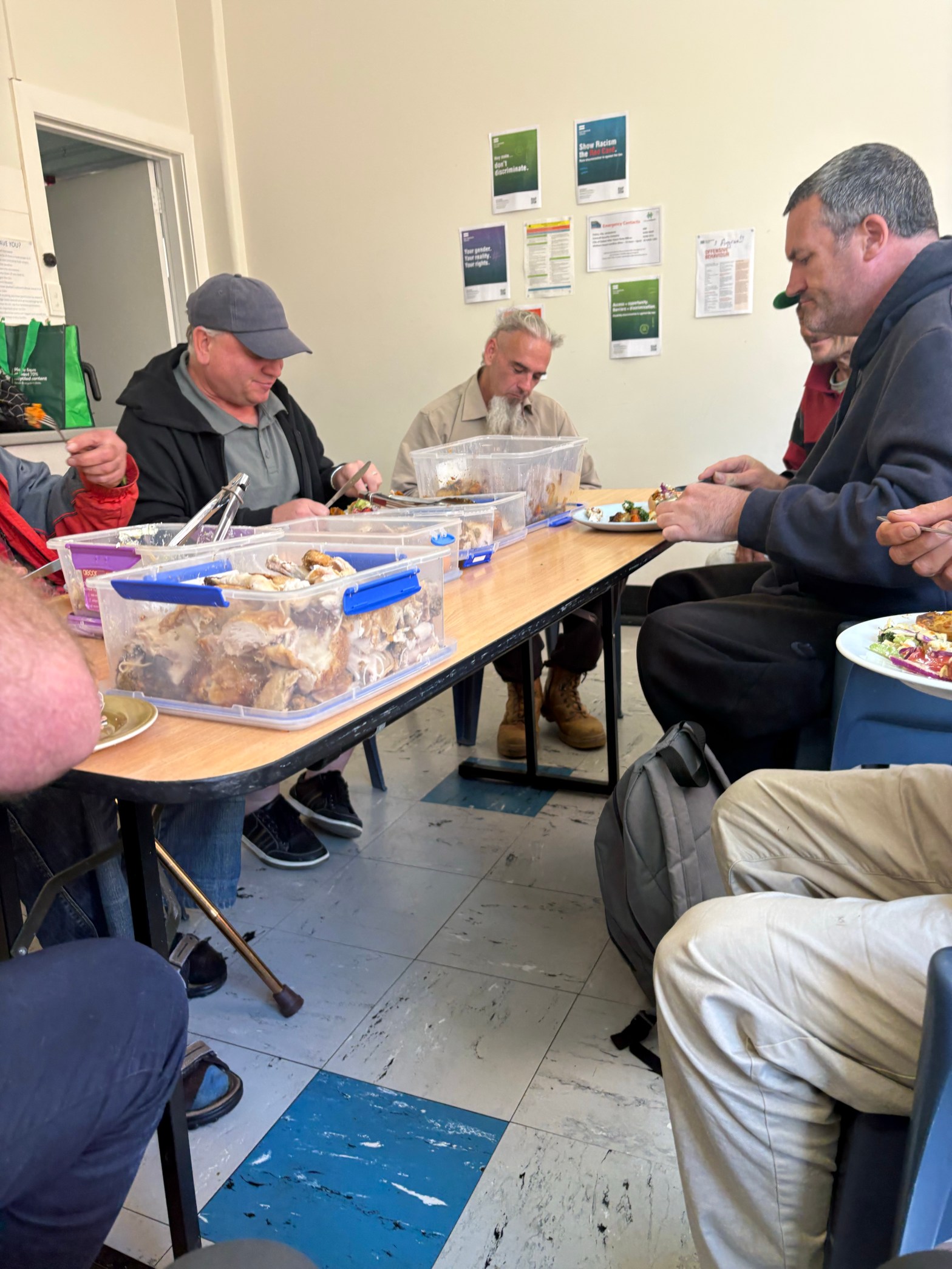
These days I cook before the event and arrive at 1pm with hot food ready to go. The table is set at the same time every week. Saturday. 1pm. No variation.
That consistency matters.
If someone wants to contribute food, the invitation is simple: Cook it first.
Bring it hot.
Arrive at 1pm.
Place it on the table at Criterion House.
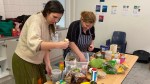
I can meet you. Show you the laneway. Walk you through the kitchen. There aren’t big introductions. There’s Pete — my trusted offsider. And then there’s the table.
On paper, that doesn’t sound hard.
But often, people don’t arrive.
(Not always — we have some beautiful long-standing relationships. But it’s not common.)
Over time I’ve realised something important.
This work is not a gesture.
It’s not about dropping off a bag of groceries and feeling good about it. It’s not about donating ingredients and disappearing.
Giving, in this space, is the same as receiving. It requires presence.
A component of FNB Hobart was intentionally constructed — ten years ago as part of my thesis — with a site component where community meets the poor face-to-face. A table where fresh, hot food appears at the same time each week. The community provides it. The poor come and eat.
And they never seem to run out.
It is not charity at a distance.
It is contact.
It is proximity.
Sometimes people offer to help. And I don’t chase them. I don’t simplify it further. If someone wants to give in this space, they have to find their own way into it — to learn, to understand, to commit.
Because this isn’t about easing middle-class guilt.
It’s about building a real table.
There are two ways to engage:
You can gesture.
Or you can come to the table.
We know which one changes people.
- The Difference Between a Gesture and a Table
- 🌈 Community Is More Than a Meal

- We found our people – whoever they are.

- Small Project: StreetShelter — A Night Off the Streets

- 🍲 Food Not Bombs Hobart — What to Know Before You Come
- Giveaway Table: Small Work, Real Presence
- (Archived) Food Not Bombs Hobart: Details. Links. Brochures.

- Food Preferences Form: We Will Deliver
- A Grassroots Community Dinner. A practical example of support in action, shaped by real conditions and shared responsibility.
- Free Produce: Delivered to Your Door. No questions asked.