Why gratitude matters in mutual aid — and why I kept showing up before it was there.
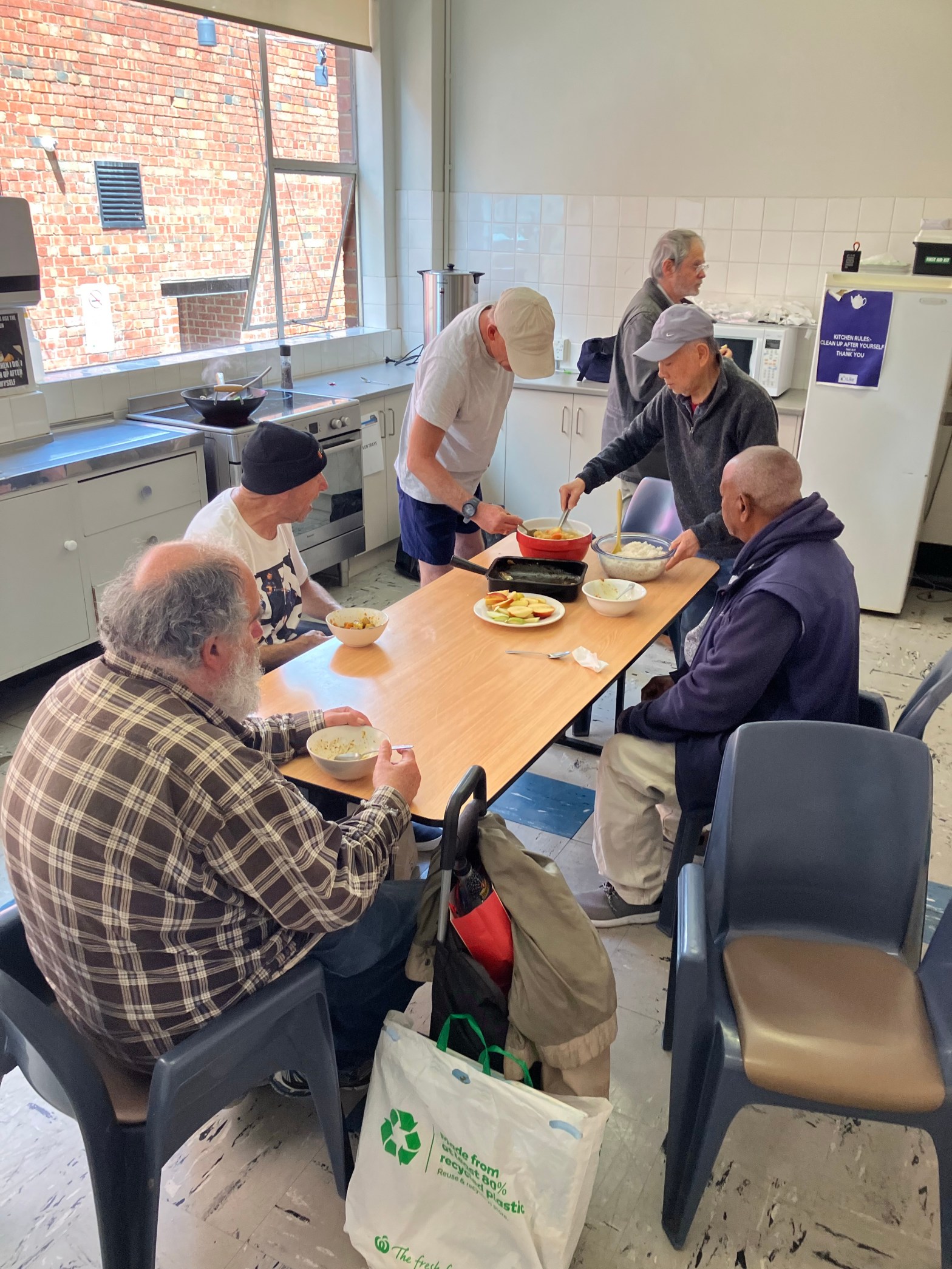
There’s a strange silence that can sit in a community kitchen.
Plates move. Soup is ladled. Bread is passed down tables. Conversations rise and fall. People come and go.
And sometimes, no one says thank you.
For years, while operating at FNB Hobart, that was simply the culture. It wasn’t rude. It wasn’t hostile. It just… wasn’t said.
Volunteers would cook. Serve. Clean. Pack down. Do it all again the following week.
And most of the time, the interaction was transactional. A meal given. A meal received. On to the next person.
At first, I noticed it.
Then I felt it.
Then I had to decide what to do with it.
Because if you’re honest, part of you wants acknowledgment. Not applause. Not praise. Just recognition that what you’re doing required effort.
There’s a subtle emotional cost to showing up consistently without feedback. It can feel invisible.
But here’s what I came to understand: gratitude wasn’t absent because people were ungrateful. It simply wasn’t part of the culture.
And culture is powerful.
In many traditional soup kitchen settings, the dynamic can unconsciously settle into provider and recipient. One group gives. One group receives. It can feel hierarchical even when no one intends it to be.
When that dynamic dominates, gratitude becomes complicated. If I’m positioned as someone dependent, thanking you may reinforce a power imbalance. If you’re positioned as rescuer, receiving thanks may quietly feed superiority.
So silence becomes normal.
But mutual aid is different.
Mutual aid isn’t charity flowing one direction. It’s community recognising shared humanity. It’s people meeting one another at eye level. It’s “we take care of each other,” not “we help them.”
For years, I kept showing up because I believed that shift was possible — from transaction to relationship, from service delivery to community building.
And then something small happened.
A friend of mine, casually and without a speech, introduced the idea of saying thank you at one or two gatherings. Not in a forced way. Just a simple modelling. A gentle cultural nudge.
It wasn’t dramatic.
But it changed things.
Over time, gratitude became more common. Not universal. Not scripted. But natural.
And here’s the surprising part: it didn’t elevate the volunteers above anyone else. It levelled the space.
Because gratitude isn’t about hierarchy. It’s about mutual recognition.
When someone says thank you in a community kitchen, what they’re really saying is:
“I see that you’re giving something.”
And when volunteers respond warmly, what they’re really saying is:
“I’m not above you. I’m alongside you.”
That’s culture change.
And culture change is slow.
There were plenty of weeks over the years where I could have quietly stepped back. Where the lack of acknowledgment could have hardened into resentment.
But I stayed because I wasn’t serving for thanks.
I was serving for transformation — not just of individuals, but of atmosphere.
If we want mutual aid spaces to feel like community rather than service points, we have to gently reshape norms. Not through confrontation, but through modelling.
You introduce eye contact.
You introduce names.
You introduce shared tables.
You introduce thank you.
Not as obligation.
As invitation.
I’ve learned this: if you only continue when you’re appreciated, your motivation will collapse the moment appreciation disappears.
But if you continue because you believe in the kind of culture that could exist, you can endure the in-between seasons.
And sometimes, the smallest shifts — a simple thank you — signal that something deeper is changing.
Not politeness.
Belonging.