
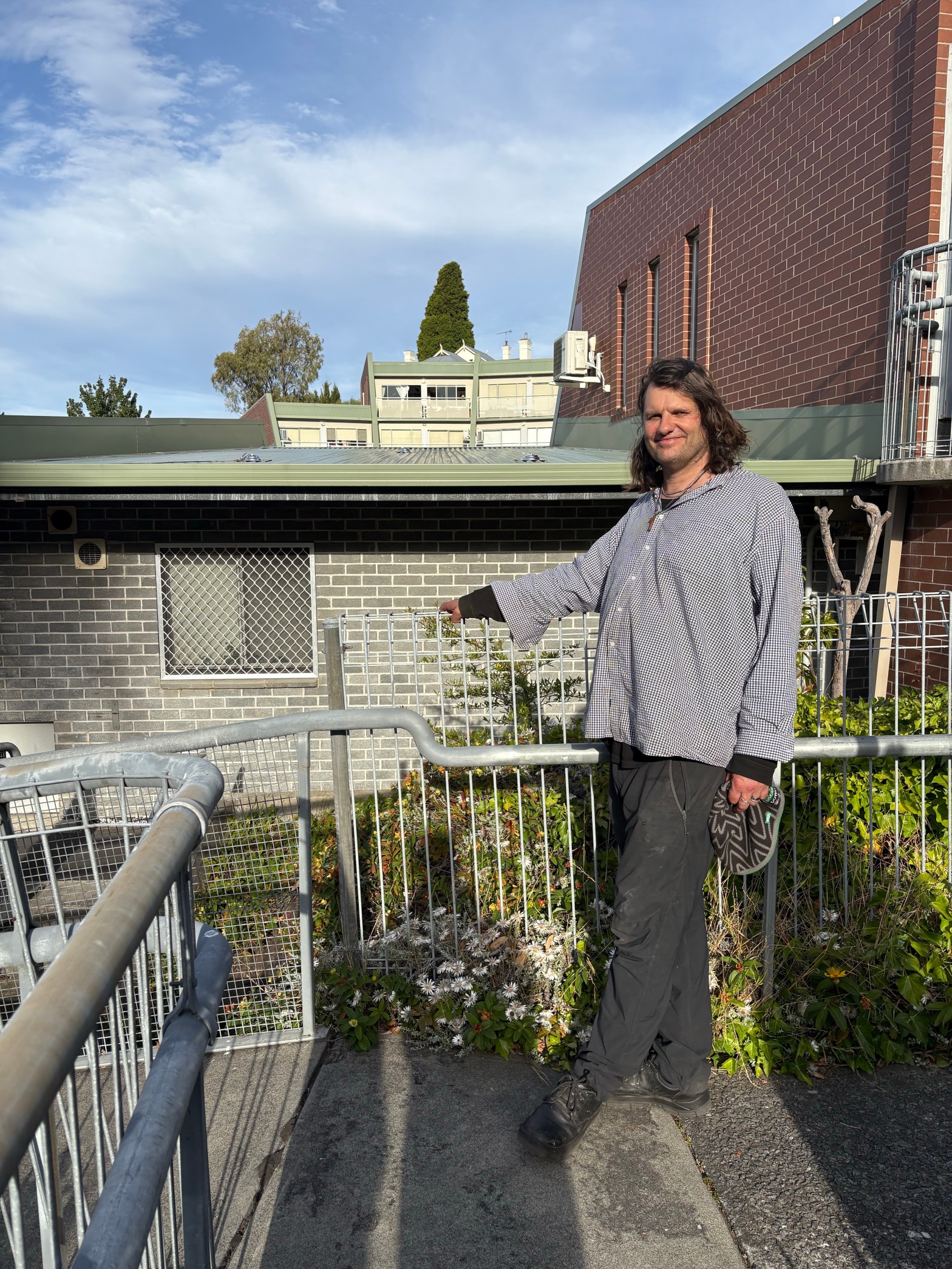
Last night in Jutland Village, while delivering food, a few tensions surfaced.
Pete told me that since I began delivering, property management has increased their own food drops. He wondered aloud whether it was competition. I don’t know if it is. But I do know that two very different logics of care are now operating side by side.
One model places food in a shared room and leaves it there. It is clean, defensible, and protected from accusation — no favouritism, no complaint, no uneven attention. It is care at a distance.
The other model is slower, riskier, and deeply human. I give the food to resident leaders — not as a strategy, but as trust. They bag it into parcels. They walk it through hallways. They knock on doors. They bring it to people who do not come out, who are not part of the visible group, who might otherwise be missed.
One resident told me plainly: “It’s better your way.” Not because more food arrives — but because it arrives with a face, a name, and a knock.
Organisations are often afraid of relationship. Relationship looks like bias. It looks like exposure. It looks like risk. So systems are built that avoid it — food in rooms, services without faces, care without closeness.
But what I saw last night is that relationship is not an extra layer added to care. It is the way care actually travels.
When residents carry food to each other, they are not just distributing supplies. They are saying:
“I see you.”
“I know you are here.”
“You are not forgotten because you did not come out.”
This is not efficient. It is not easily measured. It cannot be defended by policy language. But it is thick with dignity.
And yet — the story is not clean.
There is history here that I do not fully know. There are conflicts I only hear about in fragments. There are tensions that pre-date my arrival.
One resident is spoken about as being in long conflict with the core group. She was seen, early on, to take all the food when it was first left in the common room. It is likely she complained to property management. It is likely their new deliveries are a response to that complaint. I do not know this for sure. I only know that my arrival has stirred old currents.
I offered to make her a parcel myself. She declined. I do not know where she lives. I have not spoken with property management. I am standing inside partial knowledge.
This matters. Because sometimes what looks like trust is also protection. Sometimes what looks like generosity is also boundary. Sometimes relational care grows not only from love, but from fracture.
So I cannot tell a simple story.
I cannot say: this way is right and that way is wrong. I cannot pretend that beauty is not shaped by conflict. I cannot claim innocence in a system I have already altered by entering.
What I can say is this:
Food can sit in a room. Or it can move through relationships.
And how it moves changes what it becomes.
But relationship itself is never simple. It is shaped by memory. By injury. By fear. By loyalty. By survival.
Care that lasts is not the care that is certain. It is the care that stays teachable.
So for now I will keep doing only this:
I will keep bringing food. I will keep trusting carefully. I will keep listening longer than I speak. I will keep my stories open enough to change.
Because the deepest mistake in care is not getting it wrong — it is deciding too early that you are right.
See More posts about Reflective Hospitality
