
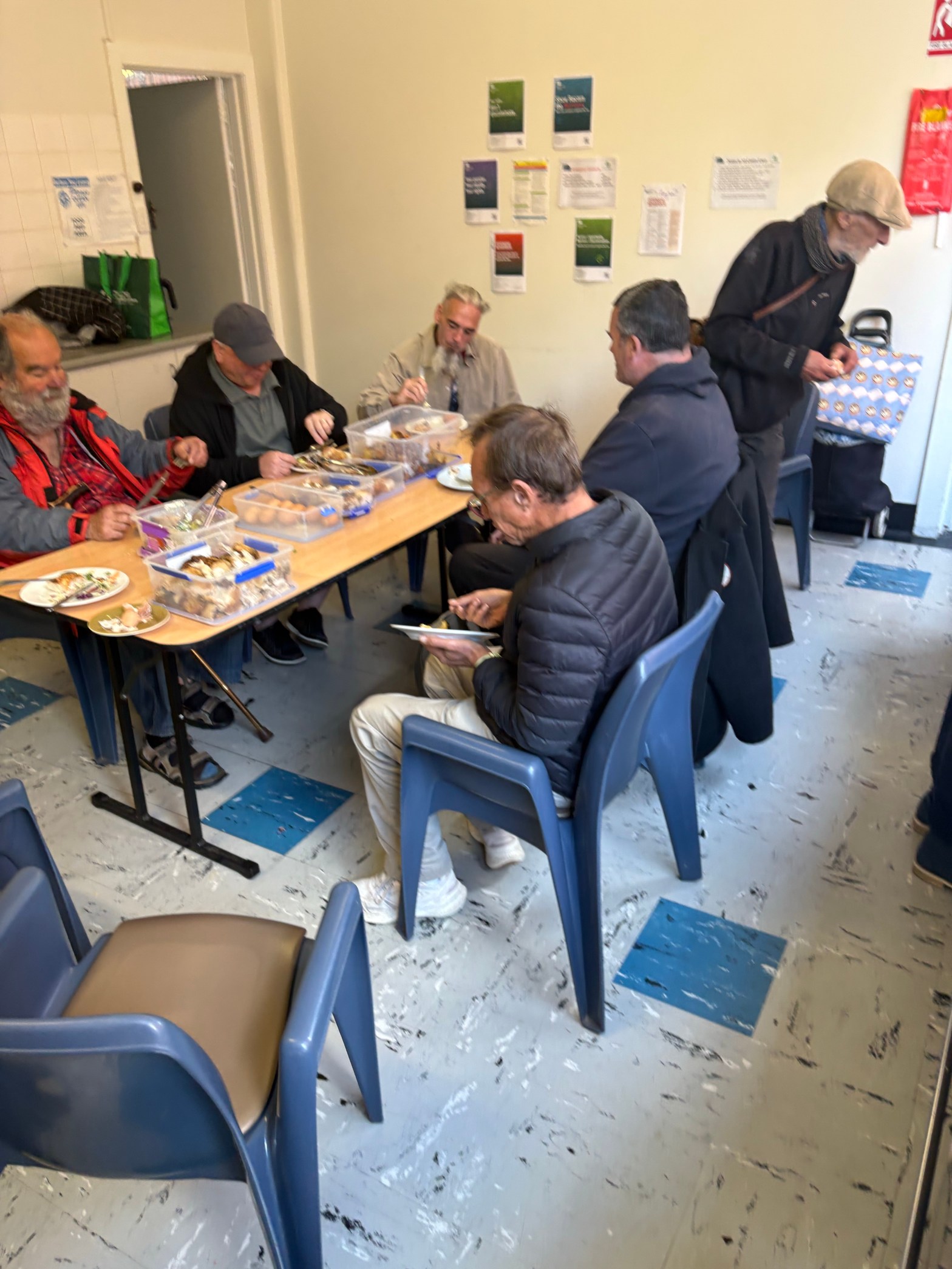
At the last community dinner, I sat with a big-hearted man who has lost his wife and children twice — first through separation, and again through the long, heavy involvement of the criminal justice system. His grief isn’t simple. It comes in layers, folded over time.
I didn’t come to fix his story. I came to honour it.
Before language can change, it has to be valued. Before someone can speak differently about their life, they need to know that the way they speak now is heard, taken seriously, and treated with dignity. So I listened. I stayed with him where he already was.
As he spoke, I noticed how much pain lived in the words he used — words shaped by loss, blame, fear, and disappointment. Not wrong words. Understandable ones. Words that had grown in hard ground.
Holding space meant letting those words land without rushing to tidy them. But it also meant gently walking alongside him as new words became possible — words that gave him more room to breathe. Words that held responsibility without crushing him. Words that made space for hope without pretending everything was fine.
We didn’t rewrite his story.
We began to widen it.
When a person feels their story is respected, they become curious about how they tell it. From that respect, language can slowly shift — from trapped to open, from shamed to responsible, from defeated to becoming.
That night reminded me:
Care often begins with listening deeply enough that new language can grow.
rRead more posts
