
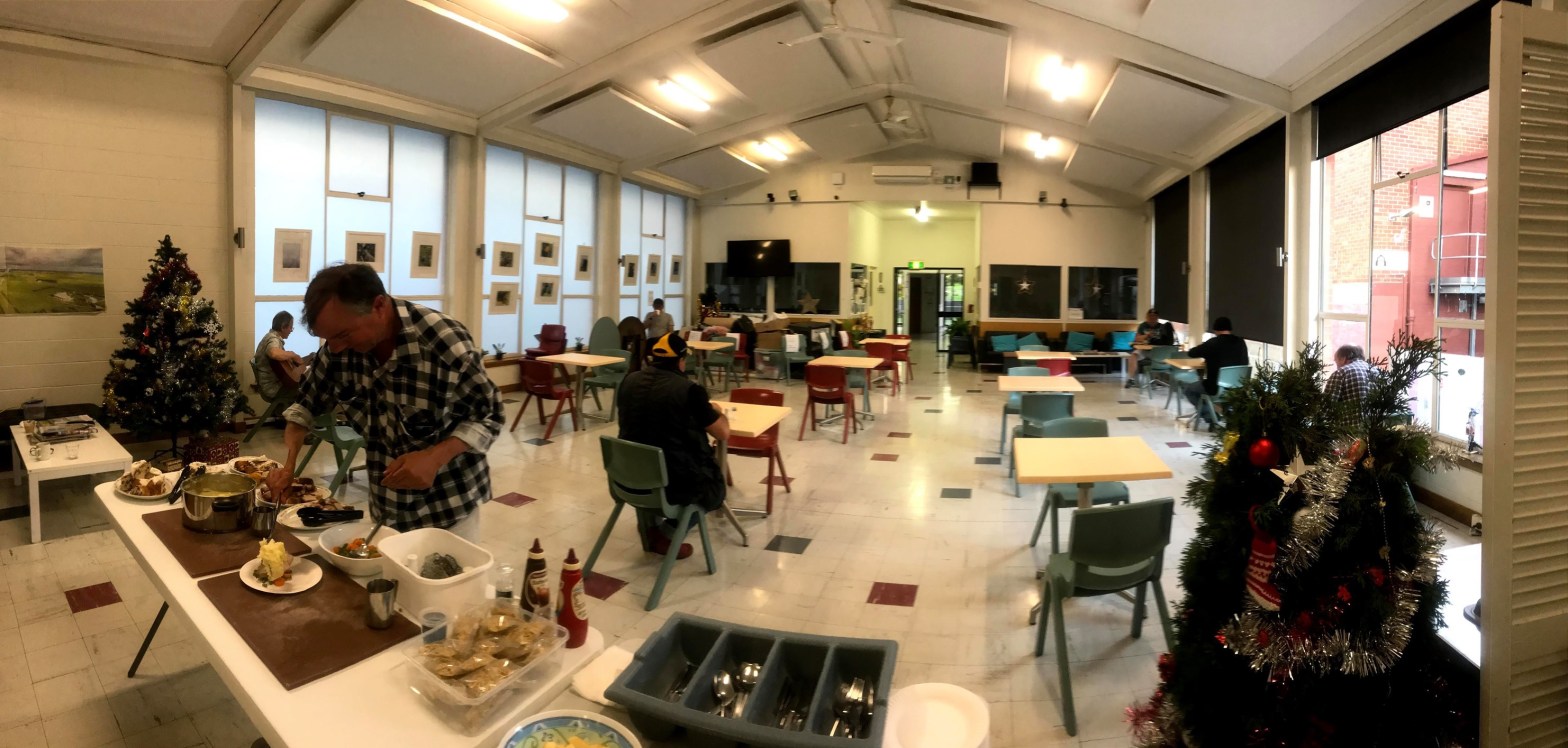
There was a time when I spent many days visiting soup kitchens.
Not as a project.
Not as observation.
But as presence — returning again and again, sitting, listening, learning how these spaces actually worked.
At first, I thought I was simply seeing how different kitchens operated. What I didn’t realise was that something slower and deeper was happening. These spaces were shaping me.
Each kitchen carried its own rhythm — not just of food service, but of coordination, relationship, and unspoken agreements. Who noticed who. Who held space. Who quietly made things work without being named as “in charge.”
Over time, these visits formed a kind of history in me. They changed how I understood care.
Becoming Known
Something shifted when I stopped feeling like a visitor.
I became recognised — not for what I brought, but for being there. The diners began to see me as one of them. Not separate. Not above. Just present.
That mattered more than I understood at the time.
Those relationships didn’t disappear when I moved on. Many remain active now — not nostalgically, but practically — because the same people still inhabit the same industry, culture, and community of service.
Some relationships deepened.
Some were lost.
All of them remain relevant.
They are part of the ecology I still work within.
Foundations That Last
One of the operators I came to know during that period later stood beside me as my best man at my wedding. Another took pride in watching me step further into this work — not as approval, but as recognition.
These weren’t symbolic gestures. They were signs that my presence had been received.
Those kitchens gave me roots.
They grounded my understanding of what it means to belong in spaces shaped by need, dignity, and shared effort. They taught me that showing up consistently — without agenda — can become foundational.
Learning the Work of Coordination
It was also during this time that I began to understand coordination differently.
Not as management.
Not as authority.
But as attentiveness.
I started to see how much invisible work goes into making shared spaces feel safe, fluid, and humane. How small decisions ripple outward. How restraint can be as important as action.
That understanding eventually led me to realise something quietly but clearly:
If I was going to do this work with integrity, I couldn’t just visit kitchens.
I needed to hold one.
Not to control it — but to steward it relationally.
What Remains
Looking back, those visits were not a phase. They were formative.
They reshaped how I move through community spaces.
They shaped the relationships I still carry.
They informed the way I now understand service, presence, and shared responsibility.
What I learned then continues to live on — not as memory, but as practice.
More Lived Experience Reflections
- Sitting in the Car Before Going Inside — That in-between moment many people know
- A Cup of Coffee Is Not a Small Thing — What ordinary gestures actually do
- Why Some People Stop Asking for Help — A reflection on withdrawal, not resistance
- Being Known by a File Before a Person — What it’s like to meet services from the other side
- When Support Feels Like Surveillance — How systems can unintentionally erode trust
