
Opening reflection
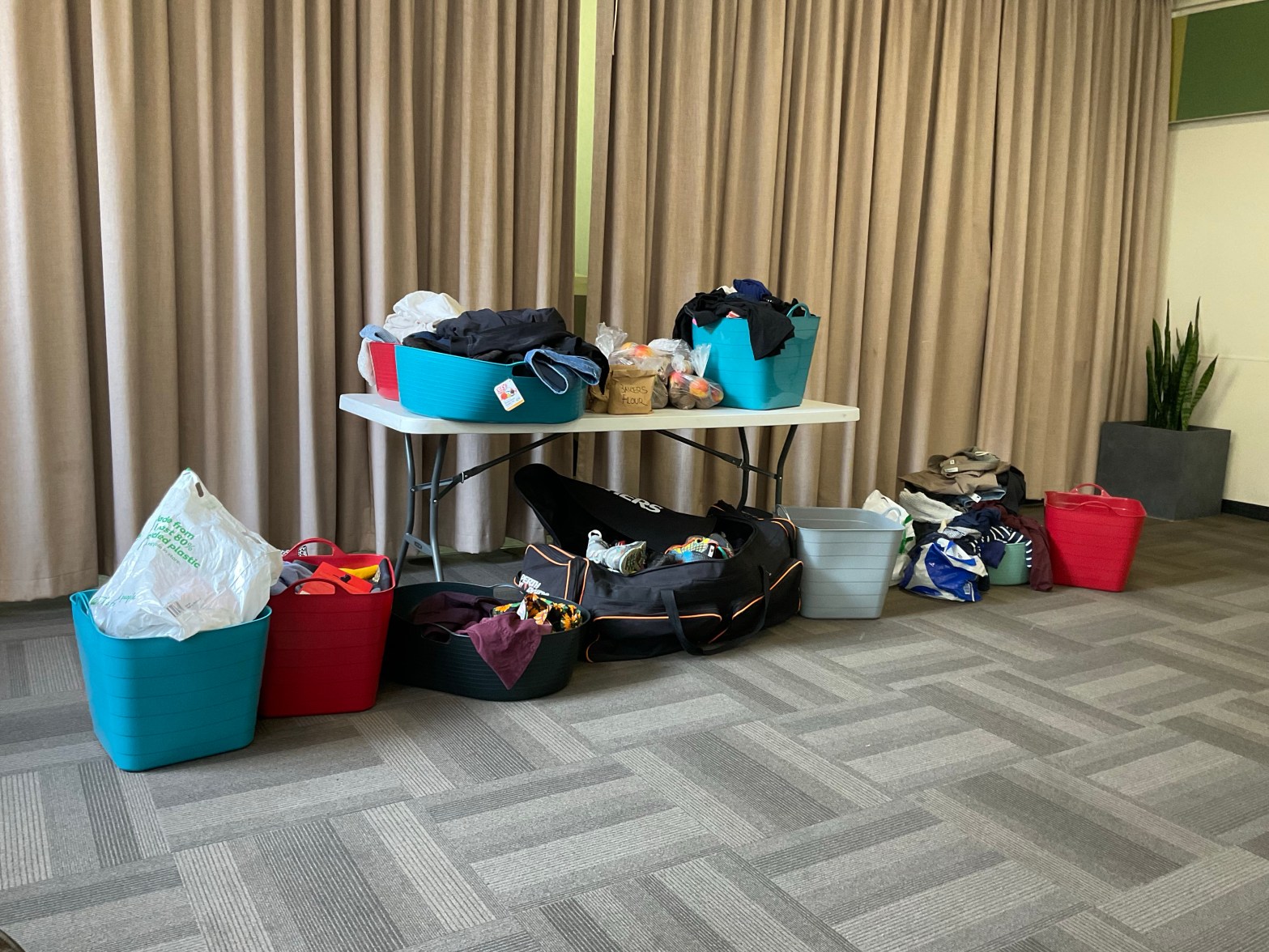
Some work is best understood by seeing it rather than explaining it. The Giveaway Table is one such work.
At first glance, it looks simple — a table, a few items laid out, a sign that says free. But what happens around it tells a deeper story about dignity, trust, and shared humanity.
How it began
The Giveaway Table didn’t begin with a plan.
It emerged from noticing small things: items being passed on quietly, conversations happening at the edges, people hesitating before accepting help — not because they didn’t need it, but because they didn’t want to feel like a problem to be solved.
So the table was placed there. Not to fix anything. Just to make space.
What happens at the table
People approach slowly. Some look, some ask questions, some apologise before taking anything.
Over time, something shifts.
The table stops being about receiving and starts being about choosing. People decide what they need. They leave things they don’t. They talk. They linger. They offer stories.
No one is recorded. No one is assessed. No one is asked to prove anything.
The work happens in the in-between moments — in the pause before taking something, in the brief eye contact, in the shared understanding that everyone here is human first.
Why this is a small project
The Giveaway Table is intentionally small.
It has:
- No formal intake
- No fixed outcomes
- No ambition to scale
It doesn’t measure success in numbers taken or items distributed. Its value lies in what it allows to happen — moments of agency, quiet generosity, and connection without obligation.
In that sense, it is complete as it is.
What I’ve learned
This project has reinforced something I keep returning to: Care doesn’t always need structure — but it does need attention.
When people are trusted, they tend to act with care. When dignity is preserved, participation becomes possible. When something is offered freely, it often creates more than it gives away.
Where it sits now
The Giveaway Table appears and disappears. Sometimes it’s present. Sometimes it rests.
It remains responsive — shaped by context, people, and timing rather than schedules or targets.
That feels important.
Closing reflection
Not every act of care needs to be named as a program. Not every response needs to be scaled. Some things are meant to remain small — because small is where people feel safe enough to arrive.
The Giveaway Table is one of those things.
