
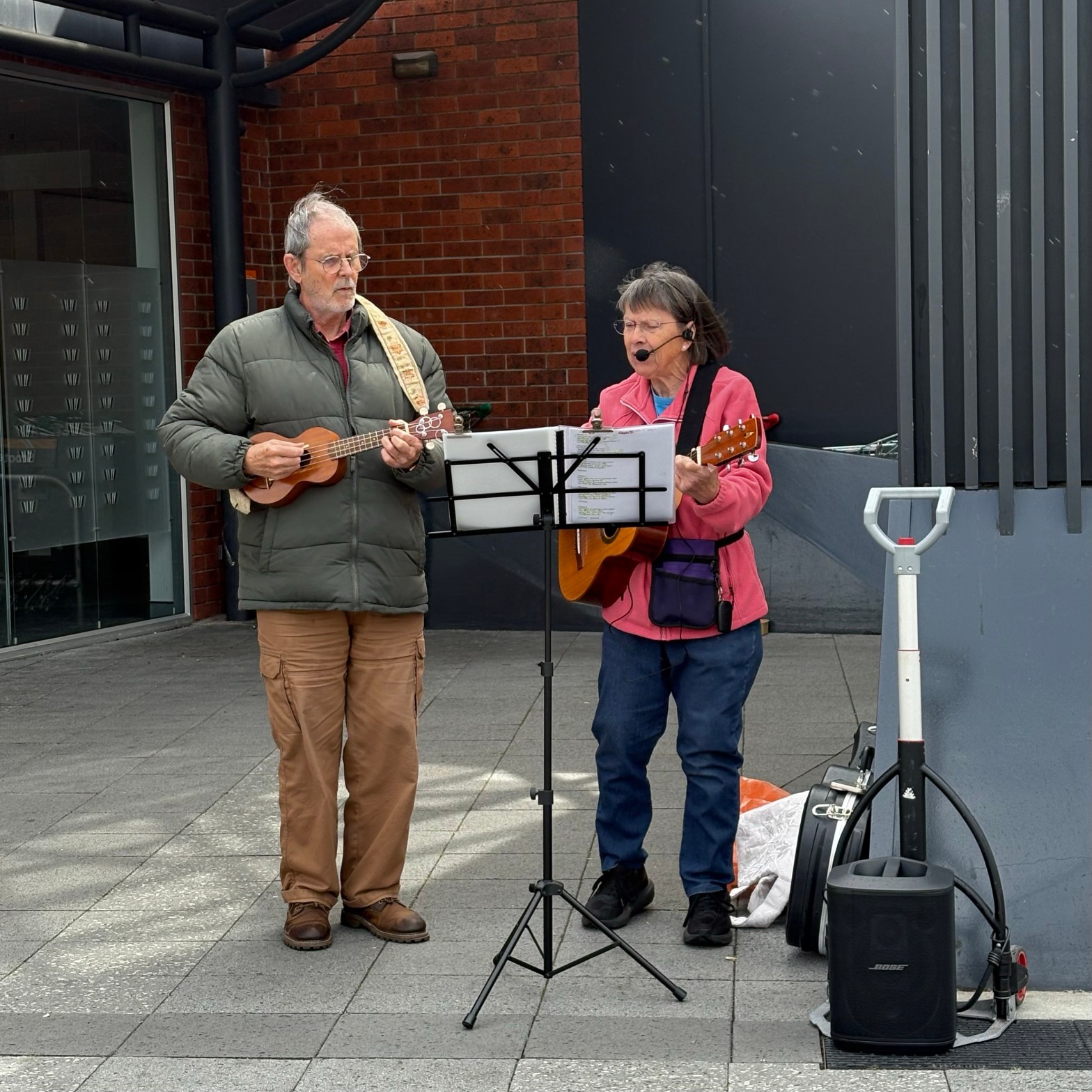
Some of the most meaningful moments in Sing With Me have had very little to do with performance.
People come carrying weight — the loss of a loved one, a relationship that has recently re-opened the heart, a season of change that hasn’t yet found language. What surprises me is how often singing becomes a place where none of that has to be resolved.
There is no timeline in a song.
You don’t have to explain where you’re at before you join in. You don’t need to decide what the experience is for. Voices meet where they are — steady, hesitant, cracked, strong — and for a few minutes, that’s enough.
I’ve noticed how relief shows up when singing isn’t treated as entertainment or improvement. When it’s not about getting better, louder, or more confident, something else becomes possible. People bring complexity with them, and it’s allowed to stay complex.
From a relational and postmodern awareness, I’m attentive to how easily experiences like grief or love get rushed into narratives of progress. Singing resists that. A song can hold longing and joy at the same time. It can carry memory without demanding closure.
There’s also something quietly equalising about singing together. No one is being fixed. No one is being assessed. The room doesn’t ask for outcomes — only presence. In that space, people often feel less alone with what they’re carrying, even if nothing has changed externally.
What I’m learning is that Sing With Me works best when it doesn’t try to be anything more than it is. A shared act. A moment of breath and sound. A place where grief, love, and ordinary life can sit side by side without being tidied up.
Sometimes that’s all that’s needed.
Read more reflections about singing:
